Today, as I sat bored and sweating in the middle of a protest rally (more on that later), I found myself thinking about what Truthseekers is up against. I mean, there are hurdles, traps and enemies everywhere. Bringing an end to caste in India is an unbelievably audacious goal.
To begin with, Truthseekers is trying to reach a massive group of oppressed people that don't even realize they are oppressed. The caste system teaches that the only way they can rise higher in the next life is if they stay utterly faithful to their low position in this life. The Brahmanical leadership perpetuates this mindset to stay on top.
But they don't stop there. To maintain the status quo, these "religious leaders" have created thousands of sub-castes to promote prejudice and hierarchy among Shudras themselves! Now the lower castes actually fight each other for superiority, leaving the upper castes with all the power.
And this is the system Truthseekers is trying to change. This is what they're up against. Crazy.
But the difficulties don't end there. To bring an end to caste, Truthseekers tries to spread the transforming message of Jesus and his kingdom. Let's just say this sounds a whole lot easier than it is...
In several Indian states, there are actually laws prohibiting conversion to Christianity unless both the converts and their pastor sign documents at the courthouse saying that they were not coerced! Can you imagine?
There are even several counter-missionary organizations that go around to villages preaching that Christians are evil and want to make the country a slave to the West. And it's not hard to understand why they are angry.
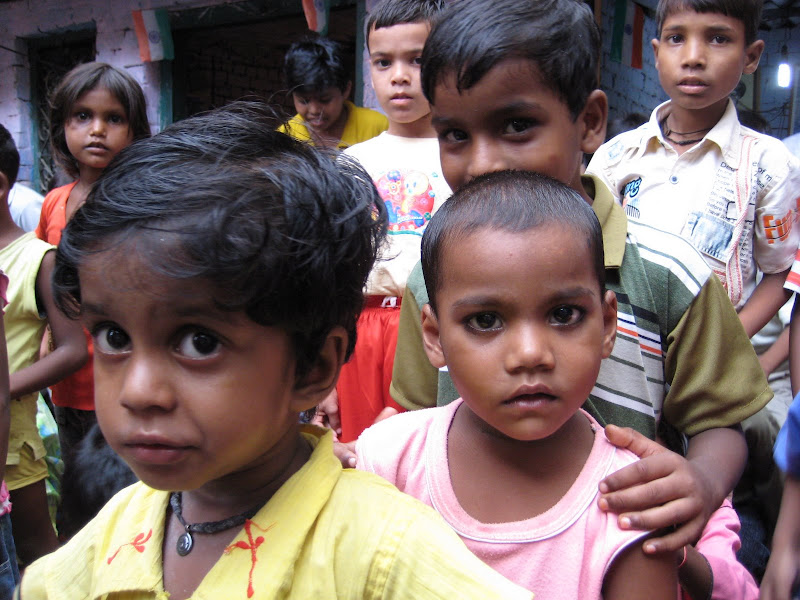
You see, when people in India becomes Christians, they are usually taught about their uniqueness and value as children of God. Freed from the bonds of caste, many of these "converts" actually try to get good educations and high-paying jobs. So in many villages, the Christians have become relatively rich and influential, which infuriates their opponents even more.
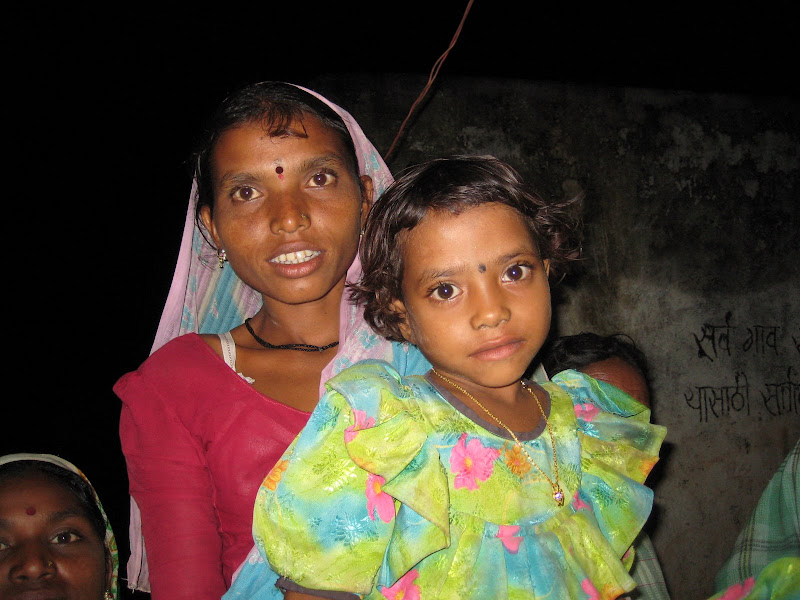
In fact, this is the root cause of the violence happening now in Orissa. Since the killings and church burnings began early last week, Truthseekers has been working non-stop to organize Christians to protest the lack of government intervention.
Ah, but even here there are roadblocks. First of all, the Christian Church in India is very fractured. There is little or no collaboration between denominations, and with a message as contextualized as Truthseekers', many churches don't want anything to do with it.
And even when Christians can agree to stand together, it usually turns into just another dime-a-dozen protest rally like the one I attended today. Just walking to the car, we passed seven other rallies and hunger strikes protesting everything from unfair treatment of electrical workers to inadequate pension plans.
How does anyone hope to be noticed by the government when speakers have to be turned all the way up just to be heard over neighboring rallies?
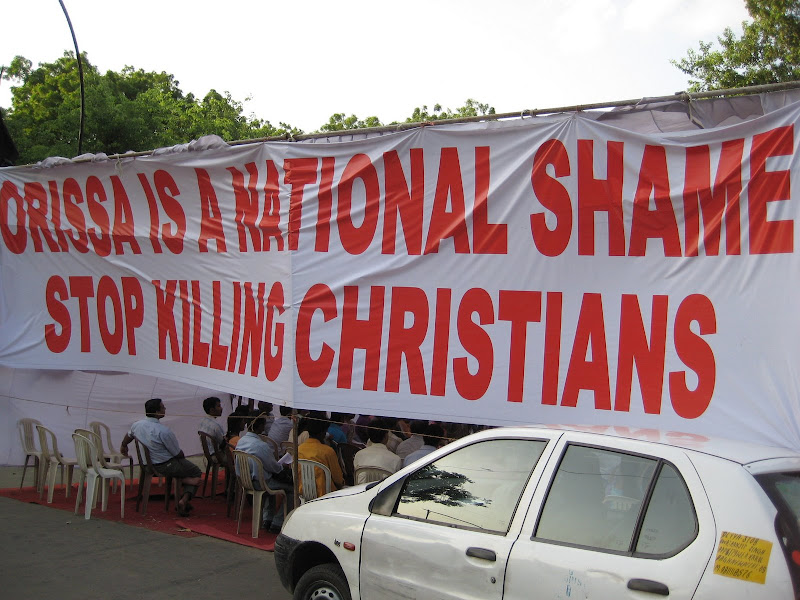
So you get the picture. Deep cultural barriers. Real-life enemies. An indifferent government. It would be natural to assume that Truthseekers will never accomplish its mission.
But that assumption would be dead wrong.
Even though fighting impossible odds, Truthseekers is actually making a difference in this hostile environment. I'm not making this up! Mindsets are changing, oppressed people are finding freedom, and cracks in the walls of caste are beginning to widen.
Believe me. I struggle as much as anyone in believing that God can really move mountains. And at times I've felt immensely frustrated here.
But during my short time with Truthseekers, I've started to understand an incredible truth... When God sets his mind to something and his people are willing to act on it, nothing is impossible.
Showing posts with label caste. Show all posts
Friday, September 05, 2008
Wednesday, August 13, 2008
Gandhi... Mahatma?
Well folks, I have some bad news. It turns out that Gandhi was not such a beacon of freedom and justice after all. Sure, he was a charismatic spiritual figure who taught the world the meaning of non-violent protest... But did you know that Gandhi was adamantly pro-caste system?Now, I don't claim to be an expert on the topic. Like most Americans, in my mind Gandhi still exists as a somewhat ambiguous figure from world history. Also, I recognize the fact that he is revered as a hero in much of the modern world and as a saint here in India (thus the name "Mahatma" meaning "Great Soul").
But imagine my surprise when I discovered a few of the things that he stood for...
In 1932, Dr. B. R. Ambedkar (more on him later) proposed separate electorates for Untouchables in India. They were not being represented in the government, and this would have been a chance to allow them to have a voice.
Gandhi, however, believed so strongly in the need for upper caste governance, that he actually started his first hunger strike to prevent the untouchables from representing themselves in government! Gandhi fasted against the rights of untouchables? What?!?
Later, talking about the degrading and exploitative occupations of the untouchables (latrine cleaning, corpse clearing, scavenging, etc.), Gandhi said, "I do not advise the untouchables to give up their trades and professions... For, a scavenger is as worthy of his hire as a lawyer or your President. That, according to me, is Hinduism" (Harijan, 6 Mar 1937).
Once, Gandhi asked a Christian missionary to pray for the untouchables, but not to try to convert them, saying that they "did not have the mind and intelligence to understand what you talked... Would you preach the Gospel to a cow?" (Harijan, 19 Dec 1936).
Basically, Gandhi was a full-blooded Hindu. He believed strongly in the caste system and thought that everyone was born into their caste due to actions in a previous life. From a purely religious standpoint, one can hardly blame him for saying and doing the things he did (after all, it was this same religious fervor that led him to oppose British rule in the first place).However, if you're like me, knowing these things about Gandhi definitely puts a damper on the usual vision of a small, saintly man committed to equality. I still respect the man as a striking example of non-violence and simplicity, but my understanding of his values has, well... expanded.
At the very least, it once more reminds us that history is never as black and white as it seems. As the world continues to grow, more and more information must be crammed into our history books. You can believe that when the educated elite are writing narratives of the past, the poor, oppressed and uneducated masses are the first to slip off the page.
One last thought...
If some of you are discouraged knowing that Gandhi was not, in fact, perfect, I would like to suggest another early 20th century Indian "hero" for you to look into.
His name was B. R. Ambedkar. Champion of the rights of the oppressed, drafter of the Indian constitution and born as an untouchable himself, Ambedkar rose above persecution to become one of the greatest advocates of lower-caste rights in the history of this country.Check out his wikipedia page, read about his work on the Truthseekers website or simply google his name and wade into the sea of praise that has arisen from the mouths and pens of his followers.
But remember... Ambedkar, like Gandhi, was never a perfect man.
Monday, July 21, 2008
Contextualization!
One of the coolest things I’ve been able to experience here is how good Truthseekers is at contextualization. Over and over I have been impressed at the way they have presented the good news of the kingdom.
For example, on Sunday I traveled with Sunil et al. to visit a church made up primarily of Dalits (“untouchables”) and Shudras (lower-caste). After the service, most of the congregation joined us in the fellowship hall to hear a presentation from Truthseekers.

First of all, when speaking of Jesus, Sunil almost always refers to him as Baliraja - “The Sacrificed King.” Baliraja is a character from a popular peasant myth in south-west India. According to tradition, he was a benevolent king who ruled a casteless and prosperous kingdom.
In the story, Baliraja was betrayed and killed by a Brahmin, but is eagerly expected to return someday. In fact, there is still a Marathi saying, ida pida javo, Balica rajya yevo. “Let troubles and sorrows go and the kingdom of Bali come.”
So what is Sunil’s message? Simply that the kingdom of Baliraja has come! The son of God, Jesus Christ is Baliraja. And he has returned to the world to bring his kingdom once more.
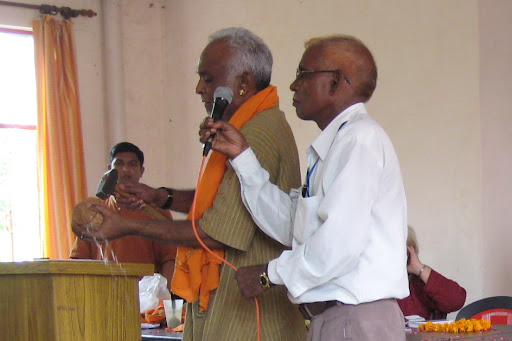
To emphasize this good news, Truthseekers has implemented a new take on communion. Instead of dipping wafers in cups of grape juice (what is that, anyway???), they take the flesh and milk of a coconut as the body and blood. Sunil takes a hammer and smashes open the coconut, symbolizing the end of caste and the breaking in of the kingdom. Wow.
Some might be a bit skeptical at this approach. But let me tell you, never in my life have I seen so many people from so many different religious backgrounds so comfortable together. On any given day in the office there might be Muslims, Sikhs, Buddhists, Brahmins and Dalits sitting at the same table, conspiring to bring in the kingdom of Baliraja.
I think they’ll be ok without the wafers…
For example, on Sunday I traveled with Sunil et al. to visit a church made up primarily of Dalits (“untouchables”) and Shudras (lower-caste). After the service, most of the congregation joined us in the fellowship hall to hear a presentation from Truthseekers.
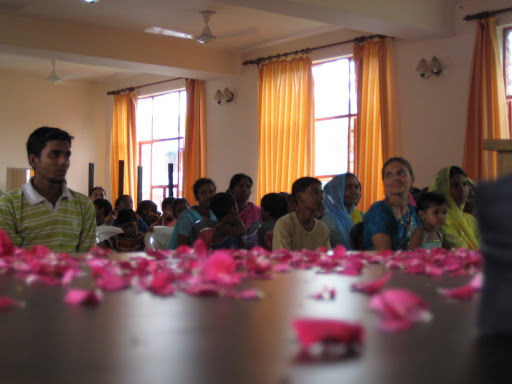
The presentation focused mainly on how the kingdom of God does away with caste once and for all. At the end of all the sermons, symbolic rituals (spreading flower petals, etc.) and Hindi worship, the congregation sat awestruck. They had never heard this message before!
Why was it so effective? Because Sunil spoke their language. He did not use common Western terminology or the standard Hindi translation of the Bible, which is geared towards a Brahmin (upper caste) audience. He used an entirely new set of terms and symbols that the oppressed lower-castes can relate to.
Yesterday, this lower-caste man was "set free"
from the bonds of Brahmanism after Sunil
shared with him the good news of the kingdom.
from the bonds of Brahmanism after Sunil
shared with him the good news of the kingdom.
First of all, when speaking of Jesus, Sunil almost always refers to him as Baliraja - “The Sacrificed King.” Baliraja is a character from a popular peasant myth in south-west India. According to tradition, he was a benevolent king who ruled a casteless and prosperous kingdom.
In the story, Baliraja was betrayed and killed by a Brahmin, but is eagerly expected to return someday. In fact, there is still a Marathi saying, ida pida javo, Balica rajya yevo. “Let troubles and sorrows go and the kingdom of Bali come.”
So what is Sunil’s message? Simply that the kingdom of Baliraja has come! The son of God, Jesus Christ is Baliraja. And he has returned to the world to bring his kingdom once more.
To emphasize this good news, Truthseekers has implemented a new take on communion. Instead of dipping wafers in cups of grape juice (what is that, anyway???), they take the flesh and milk of a coconut as the body and blood. Sunil takes a hammer and smashes open the coconut, symbolizing the end of caste and the breaking in of the kingdom. Wow.
Some might be a bit skeptical at this approach. But let me tell you, never in my life have I seen so many people from so many different religious backgrounds so comfortable together. On any given day in the office there might be Muslims, Sikhs, Buddhists, Brahmins and Dalits sitting at the same table, conspiring to bring in the kingdom of Baliraja.
I think they’ll be ok without the wafers…
Thursday, July 17, 2008
Eunuchs on the Fringe
This is an in-depth account of my experience with Deshpande on Sunday (sorry about the length!). I am sure a topic such as this will raise questions, and I am more than willing to answer with what I know. Please email me or leave comments if you are curious to learn more.
----------
A quick glance at the Indian population will reveal that it is a culture of divisions. Because of the 3000 year old caste system, huge swaths of society are ostracized, ignored and even hated. But even among those on the fringes, divisions remain. There is one group of people that is persecuted by virtually everyone… Eunuchs.The term “eunuch” may evoke antiquated images of Egyptian courtiers or Roman treble singers, but the phenomenon is very real to this day. Some sources say that there are at least one million eunuchs in India today.
There is some confusion and debate as to how these eunuchs came to be this way. Many eunuchs are purposefully castrated. Many are simply born that way. However, one thing is abundantly clear: eunuchs are on the fringe of the fringe of Indian society, and have little hope of change anytime soon.
Because of how severely eunuchs are ostracized, many turn to prostitution as a means of income. As a result, a large portion of the eunuch population is HIV positive. With little hope for a “normal” life, Indian eunuchs form small communities in the slums, caring for themselves and each other because no one else will dare.
No one that is, except for Deshpande the Truthseeker. Deshpande is a 30 year old college graduate living in Delhi. For reasons that he cannot explain, God has called him to minister to a population of around 20 eunuchs on Delhi’s poverty-ravaged east side.
I had the amazing opportunity of riding with him as he made his weekly visit to his persecuted friends. I walked away from the experience with a deep respect for Desphande and for the ministry to which he is called.
To get there, we took an hour-long rickshaw ride through heavy rush-hour traffic. Choking on exhaust fumes, I asked Desphande how he became involved with the eunuchs. He told me that one day, out of nowhere, he felt a strong calling from God to minister to the eunuch population. So, despite his own fears and misgivings, he pursued this unique calling.
As we drove, I noticed the quality of the area steadily decreasing. The eunuchs live in a tight, crowded slum. The neighborhood is made up of two story concrete buildings separated by dark, muddy alleys. Though I’ve seen several slums before, I was still amazed to see people actually living in such conditions.
After we got out of the rickshaw, Deshpande began walking down an alley and I followed. Above us, a tangled web of electrical wires was strung about seemingly at random.
Arriving at the door of the small, one-room flat, a eunuch dressed as a woman met us. You could see in her eyes the respect she had for Desphande. So few people even talk to these eunuchs, much less love, respect and dignify them. We entered and sat on a bed as three other eunuchs joined us.
The eunuchs, though dressed as women and speaking with feminine voices, had masculine features. They looked at me shyly, and I did my best to convey my respect by smiling and shaking their hands.
Within minutes of arriving, Deshpande was in animated discussion with his friends about their worth and dignity, despite their flaws. At one point, he turned to me and said “Do you have problems too?” I nodded, a little confused. “See! Everyone has problems. Everyone sins. She is thinking that she is worthless because she sins. I am telling her differently.”
After a few minutes, I had the chance to share a bit about the Beatitudes while Deshpande translated. I ended by saying, “I believe that if Jesus (Baliraja) were physically here today, he would not be in the temple or in the mosque, he would not be in a government office or having dinner with some rich people. He’d be right here in this room, because you are the ones who are blessed.” And sitting there in that room, I truly believed it.
We prayed, we talked some more, and just like that, we were back on the road. Deshpande had given me a glimpse into his calling and ministry, and I was greatly encouraged. But on the way back, he shared a little more about the consequences of following this calling, and my respect for him grew even more.
“People accuse me of things,” he told me. “They ask me ‘Why would you talk with those people?’” Apparently not everyone sees the value in Deshpande’s ministry. People accuse him of being gay or even of being a eunuch himself. Following this calling from God has strained and even broken many of Deshpande’s relationships.
Yet he will not stop. “This is God’s calling,” he continued. “When God calls you to something, what else can you do?”
Deshpande will continue this difficult ministry to these beloved children of God, despite the criticisms he receives. I can only hope that I too will approach my calling with the same level of commitment and selflessness.
I have been totally blown away by Deshpande’s ministry, and I hope you have as well. Remember… when God puts a calling on your life, “what else can you do?”
Sunday, June 01, 2008
Caste today, yesterday...
Well, I guess it's official. I'm leaving for India on July 8! Bought my tickets, bought my insurance... It's just a matter of waiting now.
I've been doing tons of reading about everything from ancient Indian history to Brahmanism to 15th century Indian poetry. Seriously, there is a pile of books on my coffee table.
As I've been reading about the Caste system and "untouchability," as it's called, I've been struck with the similarities between modern Indian society and the world of the New Testament writers. It's fascinating. There is a class of people that is not physically touched at all (Dalits/Lepers), there are deeply rooted stereotypes about entire sections of society (Shudras/Samaritans), and there is an educated elite that believes holy scripture gives them privilege (Brahmans/Pharisees).
Add that to the fact that many people where I'll be going have never even heard of Jesus and his teachings, and you can see why I'm so very curious. Imagine how the Sermon on the Mount would be received by the lower castes... "Blessed are the poor in spirit," "Blessed are the hungry," "Blessed are the meek..."
That was pretty revolutionary stuff back in its day. Maybe it should be still.
If you are interested in seeing a little bit of what I'm talking about, check out this short video. It's a segment from a longer documentary called "India: Untouched."
I've been doing tons of reading about everything from ancient Indian history to Brahmanism to 15th century Indian poetry. Seriously, there is a pile of books on my coffee table.
As I've been reading about the Caste system and "untouchability," as it's called, I've been struck with the similarities between modern Indian society and the world of the New Testament writers. It's fascinating. There is a class of people that is not physically touched at all (Dalits/Lepers), there are deeply rooted stereotypes about entire sections of society (Shudras/Samaritans), and there is an educated elite that believes holy scripture gives them privilege (Brahmans/Pharisees).
Add that to the fact that many people where I'll be going have never even heard of Jesus and his teachings, and you can see why I'm so very curious. Imagine how the Sermon on the Mount would be received by the lower castes... "Blessed are the poor in spirit," "Blessed are the hungry," "Blessed are the meek..."
That was pretty revolutionary stuff back in its day. Maybe it should be still.
If you are interested in seeing a little bit of what I'm talking about, check out this short video. It's a segment from a longer documentary called "India: Untouched."
Thursday, May 15, 2008
India!!!
Just a quick update about where I'll be spending my summer. From July 8 till... well, till I leave, I'll be in New Delhi, India!!! How cool is that?
I'll be spending my time traveling around the country with Sunil Sardar of Truthseekers International. Sunil is sort of a big deal around India because of his steadfast commitment to bring an end to the caste system.
While in India, I'll be following in Sunil's footsteps as he meets with government leaders, speaks at Christian leadership seminars, and baptizes people in the Ganges river, among other things (ok, tell me that won't look good on my resume!).
Sunil has told me that he has several college-aged students that he wants me to meet, and I am super-excited about the potential friendships that may emerge. Also, I have asked to live with a Muslim or Hindu family for at least two weeks, and Sunil says that it won't be a problem. I'm looking for full immersion here...
Obviously, there will be many more details to come. But for now, check out the video below to get a taste of what my life will be like for the next several months!
I'll be spending my time traveling around the country with Sunil Sardar of Truthseekers International. Sunil is sort of a big deal around India because of his steadfast commitment to bring an end to the caste system.
While in India, I'll be following in Sunil's footsteps as he meets with government leaders, speaks at Christian leadership seminars, and baptizes people in the Ganges river, among other things (ok, tell me that won't look good on my resume!).Sunil has told me that he has several college-aged students that he wants me to meet, and I am super-excited about the potential friendships that may emerge. Also, I have asked to live with a Muslim or Hindu family for at least two weeks, and Sunil says that it won't be a problem. I'm looking for full immersion here...
Obviously, there will be many more details to come. But for now, check out the video below to get a taste of what my life will be like for the next several months!
Subscribe to:
Posts (Atom)